Pierre Bourdieu’s theory of taste (taste is a function of class) may be true when taste is determined by classist institutions like The New Yorker. But Bourdieu’s reduction of taste to keeper of the social pecking order falls short of defining what taste truly is. This study attempts to determine whether taste can exist outside of class distinction and invidious comparison. The findings of the present study show that taste is something that transcends class and social hierarchy—it is a predilection for what looks good, sounds good and tastes good because it expresses experiential truth. What is tasteful to an individual depends on its veracity with respect to that individual’s experience.
Methods
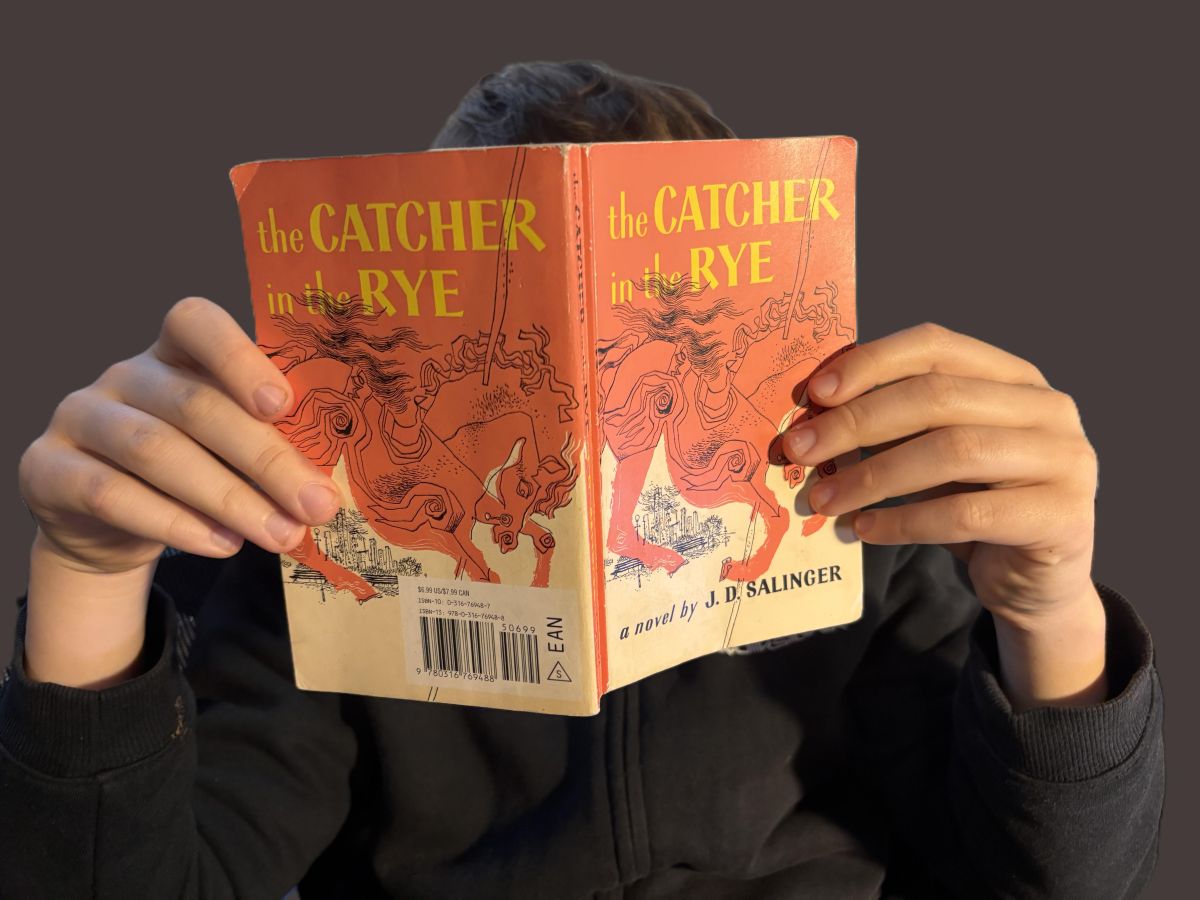
An American boy of ten, who could read fluently enough to hear the text as spoken, read the initial passages from three books considered by the American literary establishment to be in good taste: The Sun Also Rises, The Stranger and The Catcher in the Rye. The passages chosen were all in the first person (to eliminate narrative bias) and of roughly equal length (about 100 words). The boy, who had no familiarity with these books and was blinded to their titles and authors, was asked to choose which of the passages most appealed to his taste.
Results
The boy’s favorite passage comprised the first two sentences of The Catcher in the Rye. His preference for this passage was immediate and certain. Of the three narrators—the gelded Jake Barnes, the detached Meursault and the disaffected Holden Caulfield—he clearly preferred the voice of the latter. His preference correlated with the age of the character (Caulfield was the closest in age) and how the character expressed himself (irreverent, informal, spontaneous and honest).
The character Holden Caulfield impressed the boy as someone who was sympathetic to the difficulties that he himself faced. His tone and choice of words suggested that, like the boy, Caulfield struggled to make sense of the selfish, superficial and senseless behavior of adults. The boy’s taste—his predilection for one narrative over another—correlated with what he perceived to be true in his own experience.
Discussion
A boy of ten read the introductory passages from three books that were in the first person and all considered by the literary establishment to be “classics.” He was a fluent reader but had no knowledge of these books or their authors. Nor did he know how highly the editors of The New Yorker regarded these books and how long it had been since those editors had read anything as well written, no matter how they pretended that the fiction they currently selected for publication was as good.
After reading the passages, the boy was told to choose which of the passages most appealed to his taste. He unhesitatingly chose the following introductory passage of Catcher in the Rye by J.D. Salinger:
“If you really want to hear about it, the first thing you’ll probably want to know is where I was born, and what my lousy childhood was like, and how my parents were occupied and all before they had me, and all that David Copperfield kind of crap, but I don’t feel like going into it, if you want to know the truth. In the first place, that stuff bores me, and in the second place, my parents would have about two hemorrhages apiece if I told anything pretty personal about them.”
When asked what appealed to the young reader’s taste, his answer had nothing to do with class. He liked Caulfield’s narrative style, which was casual, plaintive, honest and humorous. In terms of content, he understood that Caulfield didn’t want to bore him with biographical detail and didn’t want to anger his parents by exposing their personal lives. He found the image of his parents having “a couple of hemorrhages apiece” funny, as he’d seen his own parents get pissed off more times than he could count. The boy agreed with Caulfield that a lot of unnecessary detail is boring and that parents tend to get riled when you make their private their matters public, especially when those matters are embarrassing.
Importantly, the boy trusted Caulfield. Why? Because he thought that Caulfield was telling the truth and had practically stated it outright: “if you want to know the truth.” Also, the boy liked that Caulfield insisted on telling the story his own way, though some adults might find it inappropriate and disrespectful, especially coming from a younger person. But he didn’t think that Caulfield was out to offend anyone. “He was just being truthful about how he felt.” He also appreciated Caulfield’s good sense to avoid saying stuff that might get him in trouble. The boy could relate to that, because he’d gotten in trouble plenty of times for “saying stuff that I shouldn’t have said.”
Finally, the boy appreciated that this short passage said a lot, both about Caulfield and the book itself, in a really short time. Technically, the passage provided a disclaimer (this book will probably not give you what you want if you’re a snob or an editor at The New Yorker), a statement of intent (this book will not burden you with the meaningless detail that snobs and editors at The New Yorker have come to expect of the classics) and a demonstration of method (this narrative will be idiosyncratic, regardless of how distasteful snobs and the editors at The New Yorker may find it).
Though the boy understood that the narrator was “sort of making fun of snobs,” he had no idea that the editors at The New Yorker had rejected The Catcher in the Rye because they found Holden Caulfield to be “implausible.” Which is funny when you consider that our ten-year-old reader never once doubted that Caulfield was a real person and the book is still relevant because of the authenticity of Caulfield’s voice.
Essential to the boy’s taste was his conviction that Caulfield was a plain dealer, who had doubts like any real person his age might, but who saw the truth of things. He didn’t know exactly what “all that David Copperfield crap” meant, but generally understood it to be boring detail about someone’s background. Of course, the editors at The New Yorker, due to their Ivy League education, would have been well aware that Salinger was referring to the book David Copperfield by Charles Dickens, which ranks as one of the greatest bildungsromans ever written. And Salinger’s irreverent attitude towards that great work of literature might have offended their refined sensibilities. But what mattered to the boy was that Caulfield was true to his own idiom and his own taste, however vulgar the literary establishment might have considered them when Salinger submitted the manuscript.
One thing the boy really liked about Caulfield was his open negativity. As he put it, “He’s totally not afraid to call bullshit.” He said that Caulfield gave him a sense of freedom, “a break from the stuff I have to deal with every day.” I thought that he might be referring to people at school, so I asked him what he meant by that. He said that he was referring to people like the ones who enforced school rules. Though he knew that the rules were essentially laws to make sure that kids showed kindness, consideration and respect at school, outside of school he saw little of that. “Maybe that’s why the lunch monitor, my science teacher and that cranky lady who works in the office are so unrealistic.” I assume that he meant “hypocritical.”
Conclusion
Taste is less a function of class than a function of experiential truth. When Ezra Pound said, “No man understands a deep book until he has seen and lived at least part of its contents,” he did not mean that a boy of ten, to understand Homer’s Odyssey, should live in luxury on Calypso’s Island and choose between living forever with a hot goddess and risking death on the open ocean to grow old with his wife and son. He meant that for anyone to understand a book, they should sense that at least some of it is analogous to something they have experience in life.
In this study, taste (as defined by a predilection for one text over another in a boy of ten) was clearly expressed in terms of meaningful relevance to the boy’s experience. There were, of course, other factors that influenced the boy’s taste, like the sensibility and attitude of the narrator. But these had the effect of winning the boy’s trust and reinforcing his belief that the narrator was a real person. In short, Holden Caulfield was understandable to the boy because he demonstrated an understanding of the boy’s experience. Therefore, I conclude that taste, contrary to being a function of class or whatever else the editors at The New Yorker consider it to be, is a function of experiential truth.